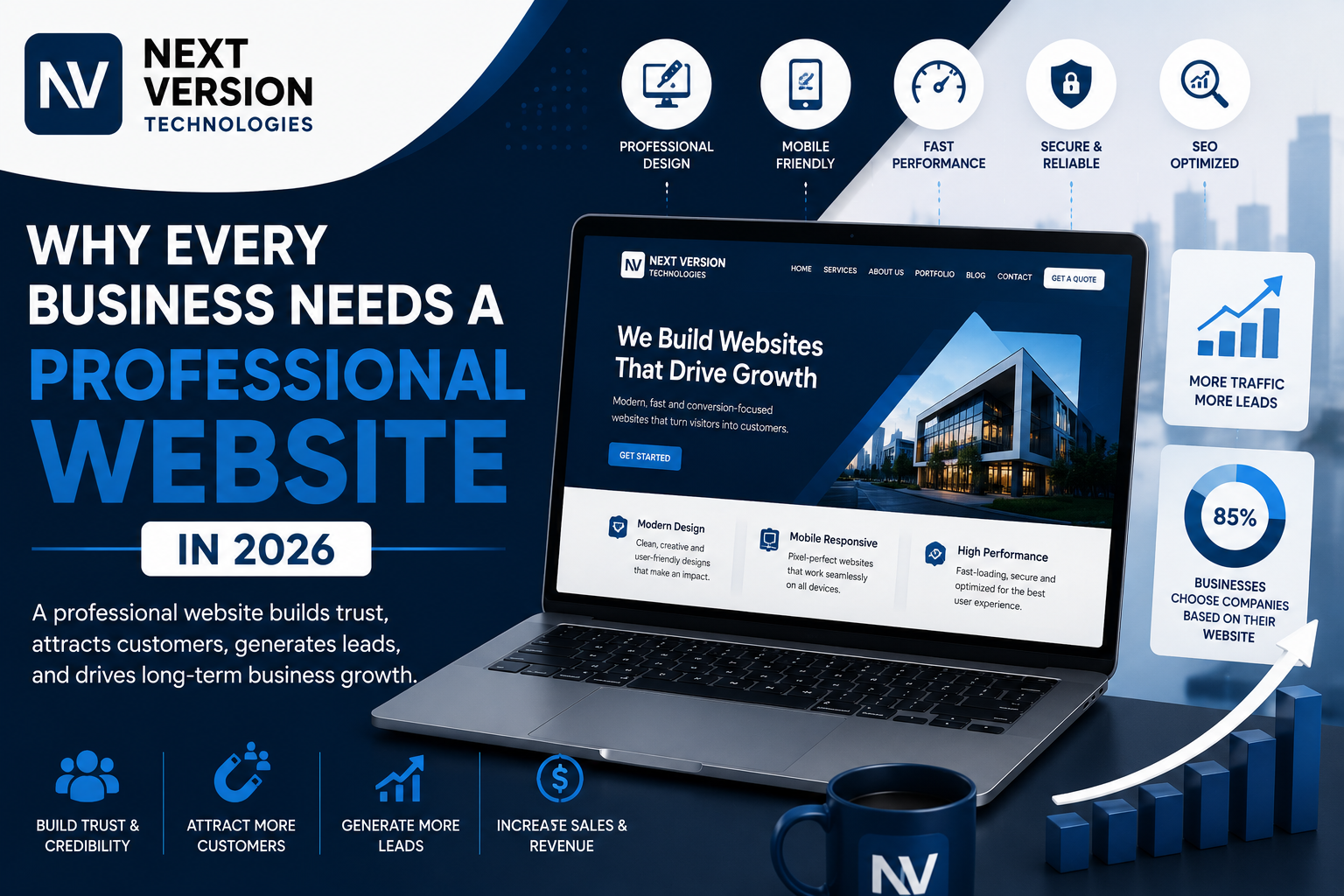
In today’s digital economy, a website is no longer a luxury—it is a necessity.
Regardless of your industry, customers expect to find information about your business online. Whether they are researching services, comparing providers, reading reviews, or making purchasing decisions, your website often serves as the first impression of your brand.
Businesses without a professional website risk losing credibility, customers, and revenue opportunities.
In this article, we’ll explore why every business needs a professional website in 2026 and how the right website can become one of your most valuable business assets.
Your Website Is Your Digital Storefront
Imagine a customer searching for your business online.
What do they find?
A professional website creates confidence and demonstrates that your business is legitimate, trustworthy, and established.
Unlike social media platforms, a website is fully owned and controlled by your business.
It becomes your permanent online headquarters where customers can learn about:
- Your services
- Your products
- Your team
- Your expertise
- Your contact information
A website is often the first interaction a potential customer has with your brand.
First Impressions Matter
Studies consistently show that users form opinions about websites within seconds.
An outdated or poorly designed website can make visitors leave immediately.
A professional website helps businesses:
- Build trust
- Improve credibility
- Create authority
- Enhance user experience
- Increase engagement
A clean, modern design communicates professionalism and reliability.
Customers Search Online Before Buying
Modern consumers research businesses before making decisions.
They search for:
- Services
- Pricing
- Reviews
- Contact information
- Company background
Without a professional website, potential customers may choose competitors that provide a stronger online presence.
Being discoverable online is now a fundamental business requirement.
Professional Websites Generate Leads
A website should do more than simply look attractive.
It should actively generate business opportunities.
Effective websites include:
Contact Forms
Allow visitors to quickly request information or quotes.
Call-to-Action Buttons
Encourage users to take action.
Examples include:
- Book a Consultation
- Request a Quote
- Contact Us
- Schedule a Demo
Landing Pages
Dedicated pages designed to convert visitors into leads.
A well-structured website works as a 24/7 sales and marketing tool.
Websites Improve Business Credibility
Consumers naturally trust businesses with professional websites.
Your website allows you to showcase:
- Testimonials
- Case studies
- Certifications
- Awards
- Client success stories
These trust signals help potential customers feel more confident when choosing your business.
Mobile Users Continue to Grow
More than half of all website traffic now comes from mobile devices.
A professional website must be:
- Mobile responsive
- Fast loading
- Easy to navigate
- Optimised for all screen sizes
Mobile-friendly websites improve user satisfaction and support better search engine rankings.
Better Visibility Through Search Engines
A professional website enables businesses to benefit from search engine optimisation (SEO).
SEO helps businesses:
- Increase visibility
- Attract organic traffic
- Generate qualified leads
- Improve brand awareness
Without a website, businesses miss opportunities to appear in Google search results.
Competitive Advantage
Many businesses still rely solely on social media.
While social platforms are important, they should complement—not replace—a website.
A professional website provides:
- Greater control
- Better branding
- Improved customer experiences
- More lead-generation opportunities
Businesses that invest in their online presence often outperform competitors that neglect it.
Essential Features Every Professional Business Website Needs
Fast Loading Speed
Visitors expect websites to load quickly.
Professional Design
Clean layouts improve credibility and engagement.
Clear Navigation
Users should easily find important information.
Strong Calls-to-Action
Guide visitors toward desired actions.
Security
SSL certificates and security measures build trust.
Search Engine Optimisation
SEO helps customers discover your business online.
Analytics Tracking
Monitor traffic, conversions, and user behaviour.
Common Website Mistakes Businesses Make
Avoid these common issues:
- Slow loading pages
- Outdated designs
- Poor mobile experience
- Weak calls-to-action
- Confusing navigation
- Lack of SEO optimisation
These problems often reduce traffic, engagement, and conversions.
The Future of Business Websites
Business websites continue evolving with technology.
Emerging trends include:
- AI-powered chatbots
- Personalised user experiences
- Voice search optimisation
- Interactive content
- Advanced analytics
Companies that embrace modern web technologies will be better positioned for long-term success.
Final Thoughts
A professional website remains one of the most important investments a business can make in 2026.
It strengthens credibility, improves visibility, generates leads, supports marketing efforts, and provides customers with a central place to interact with your brand.
Whether you’re a startup, local business, or growing enterprise, a professional website is no longer optional—it’s essential for sustainable growth in the digital age.