How AI Is Transforming Digital Marketing in 2026
Artificial Intelligence (AI) is no longer a futuristic concept. It has become one of the most powerful technologies shaping modern businesses and digital marketing strategies.
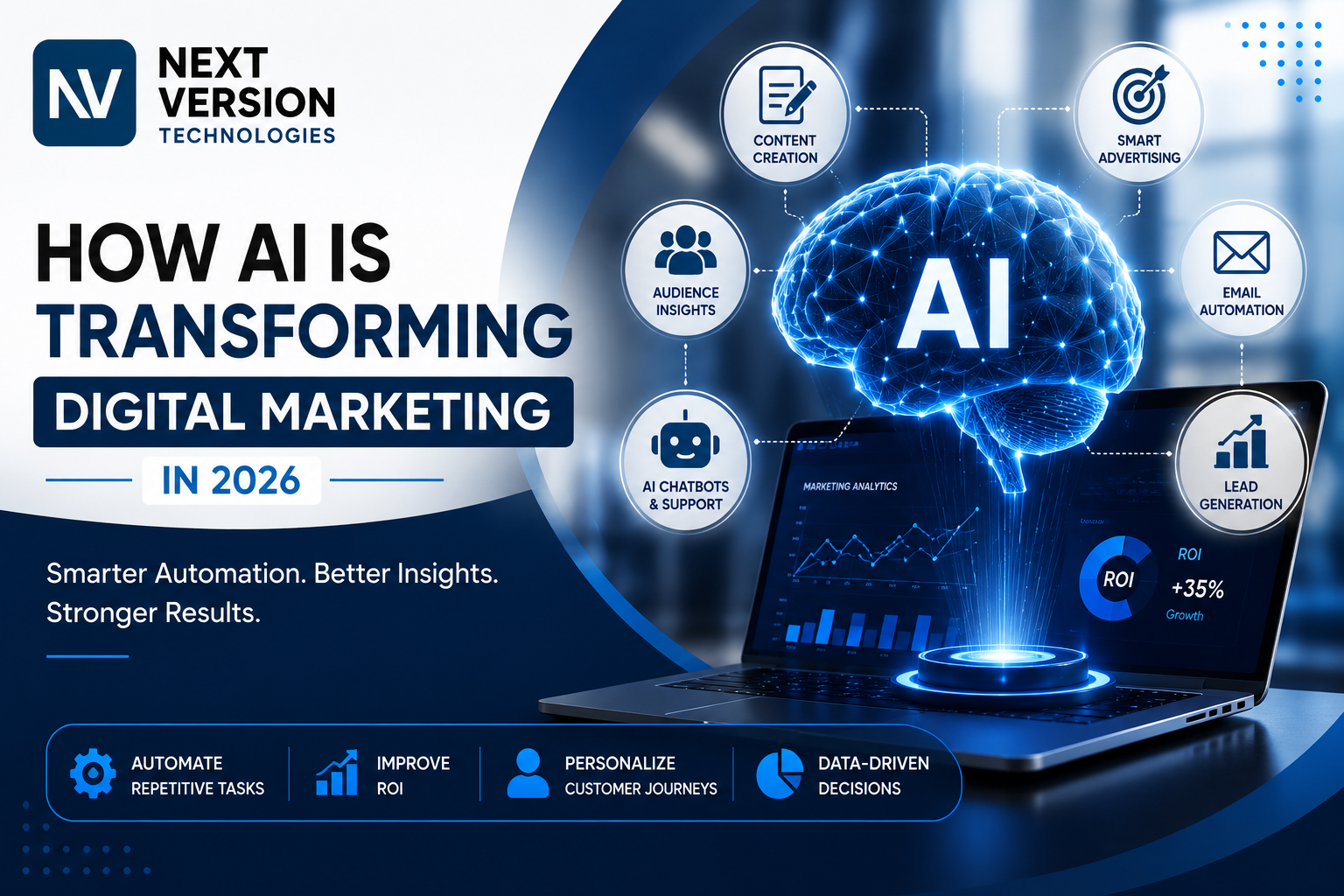
From content creation and customer support to predictive analytics and lead generation, AI is helping businesses work smarter, reduce costs, and achieve better results.
As competition grows online, companies that embrace AI gain a significant advantage over those relying solely on traditional marketing methods.
In this guide, we’ll explore how AI is transforming digital marketing in 2026 and why businesses should start leveraging AI-powered solutions today.
What Is AI in Digital Marketing?
AI in digital marketing refers to the use of artificial intelligence technologies to automate, analyse, optimise, and improve marketing activities.
AI systems can process massive amounts of data, identify patterns, predict customer behaviour, and make intelligent decisions faster than humans.
Businesses use AI to:
- Automate repetitive tasks
- Improve customer experiences
- Create marketing content
- Analyse customer data
- Generate leads
- Increase conversions
AI helps marketers focus on strategy while automation handles time-consuming processes.
Why AI Is Becoming Essential for Businesses
Modern consumers expect:
- Faster responses
- Personalised experiences
- Relevant recommendations
- Seamless online interactions
Meeting these expectations manually becomes difficult as businesses grow.
AI allows organisations to deliver personalised experiences at scale while improving efficiency and reducing operational costs.
AI-Powered Content Creation
Content remains one of the most important aspects of digital marketing.
AI tools can help businesses create:
- Blog articles
- Social media posts
- Product descriptions
- Email campaigns
- Video scripts
- Ad copy
Rather than replacing human creativity, AI accelerates content production and helps marketing teams work more efficiently.
Benefits of AI Content Creation
- Faster content production
- Improved productivity
- Content idea generation
- Better consistency
- Enhanced content optimisation
Businesses can produce more content without significantly increasing costs.
Personalised Customer Experiences
One of AI’s greatest strengths is personalisation.
AI analyses customer behaviour to deliver:
- Product recommendations
- Personalised emails
- Dynamic website content
- Targeted advertisements
When customers receive relevant experiences, they are more likely to engage and convert.
Personalisation has become a major factor in customer satisfaction and loyalty.
AI in Lead Generation
Generating quality leads remains a top priority for businesses.
AI improves lead generation by:
- Identifying high-intent prospects
- Scoring leads automatically
- Analysing customer behaviour
- Predicting buying intent
Instead of wasting resources on unqualified prospects, businesses can focus on leads with the highest conversion potential.
Chatbots and Automated Customer Support
AI-powered chatbots have become increasingly sophisticated.
Modern chatbots can:
- Answer common questions
- Schedule appointments
- Recommend products
- Capture leads
- Provide 24/7 support
This improves customer service while reducing support costs.
Businesses can maintain continuous communication without requiring large support teams.
Smarter Advertising Campaigns
AI is transforming paid advertising platforms such as:
- Google Ads
- Facebook Ads
- Instagram Ads
- LinkedIn Ads
AI algorithms automatically optimise:
- Audience targeting
- Bid strategies
- Ad placements
- Campaign budgets
- Conversion tracking
This leads to improved return on investment and more efficient advertising spending.
Predictive Analytics and Business Insights
AI can analyse historical data and forecast future trends.
Businesses use predictive analytics to:
- Forecast demand
- Understand customer behaviour
- Improve inventory planning
- Optimise marketing campaigns
These insights help organisations make more informed decisions and stay ahead of competitors.
Marketing Automation at Scale
Marketing automation has become a core business requirement.
AI-powered automation enables businesses to:
- Send automated emails
- Nurture leads
- Schedule content
- Segment audiences
- Trigger personalised campaigns
Automation reduces manual work while maintaining consistent customer engagement.
Challenges of AI Adoption
Although AI offers significant benefits, businesses should also understand its limitations.
Common challenges include:
- Data privacy concerns
- Initial implementation costs
- Learning curves
- Dependence on quality data
- Human oversight requirements
Successful businesses combine AI technology with human expertise rather than relying solely on automation.
The Future of AI in Digital Marketing
AI will continue evolving rapidly over the coming years.
Future developments may include:
- Advanced personalisation
- AI-generated video content
- Predictive customer journeys
- Voice search optimisation
- Fully automated marketing workflows
Businesses that adopt AI early will be better positioned to compete in increasingly digital markets.
Final Thoughts
AI is fundamentally transforming digital marketing in 2026. From content creation and lead generation to customer support and predictive analytics, AI enables businesses to achieve greater efficiency and better results.
Companies that embrace AI can improve customer experiences, increase conversions, reduce costs, and gain a competitive advantage in today’s digital landscape.
The future of marketing is not human versus AI. It is businesses using AI strategically to enhance human creativity, decision-making, and growth.